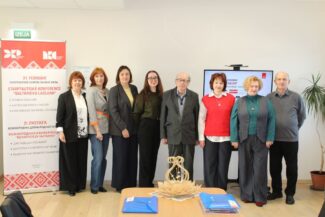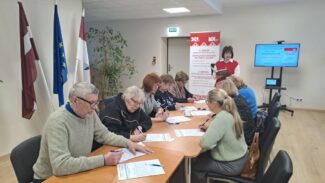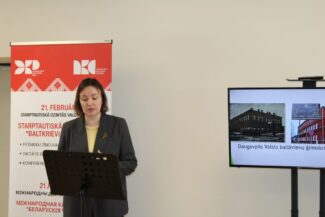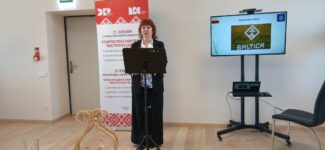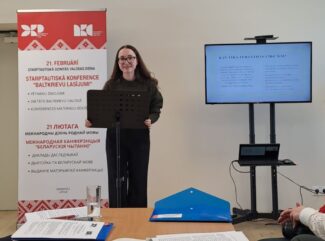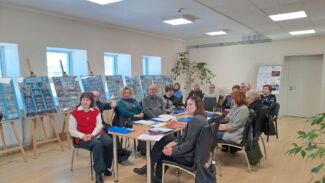

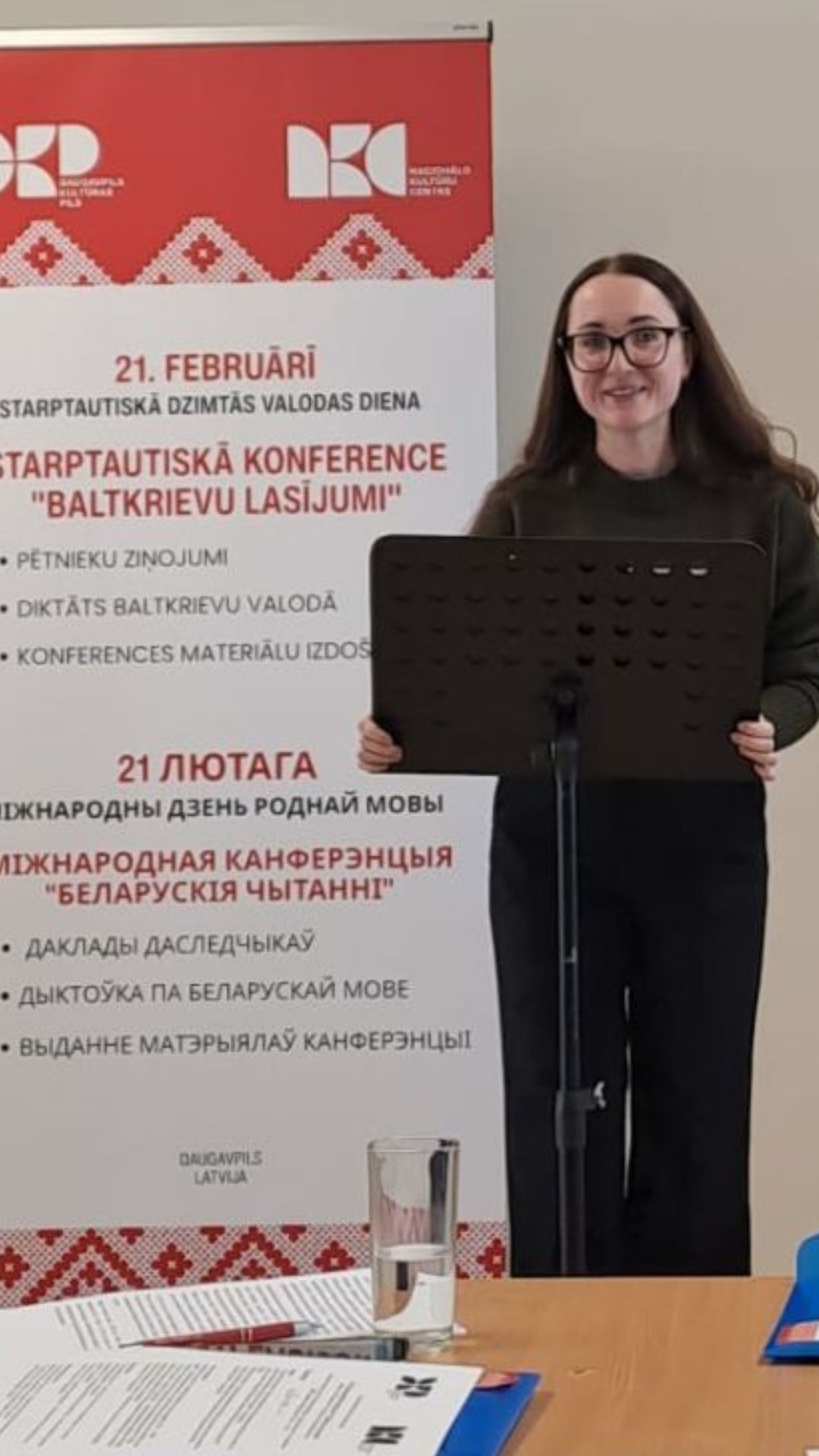
The conference brought together researchers from Latvia and Lithuania who study the history of the Belarusian community in Latvia and analyze the cultural and historical ties between Latvia and Belarus. In total, participants presented 11 research papers divided into four thematic blocks: education, archival discoveries, personalities, and historical memory.
Thematic blocks and presentations
- Education
Zhanna Romanovska spoke about Rainis’ address at the 1926 Academic Conference in Minsk on the reform of Belarusian orthography and the alphabet. Anna Ivane reviewed the history of the Riga Janka Kupala Belarusian Primary School. Marija Pometjko introduced the experience of the Belarusian Cultural Center’s amateur art groups in nationally significant events, including the International Folklore Festival “Baltica.”
- Archival Discoveries
Milana Drugoiveiko presented artifacts found in the documents of the Latvian State Historical Archives of the National Archives of Latvia related to the 1924–1925 “Belarusian trial.” Ineta Janovska spoke about documents of Vladimir Pigulevsky, a deputy of the 3rd Saeima and head of the Belarusian Department of the Ministry of Education of the Republic of Latvia, preserved in the collection of the Daugavpils Museum of Local History and Art. Zhanna Romanovska demonstrated previously unknown photographs (1931–1935) of the teacher Sakharov family from a private archive.
- Personalities
Jevgenijs Golubevs revealed the role of the Tiesenhausen family in the history of Belarus and Latvia. Josifs Ročko spoke about the famous artist Yudel Pen, who studied painting in Dvinsk. Gaļina Ivanova presented the artist Pyotr Hudobchenok and his unique 3D miniatures.
- Historical Memory
Jeļena Zabeļska led a virtual tour of the Rasos Cemetery in Vilnius, highlighting the memorial sites of prominent Belarusian cultural figures. Andrejs Taturs continued his research on the Belarusian necropolis in Latvia, analyzing the condition of memorial sites and their preservation both in Latvia and abroad.
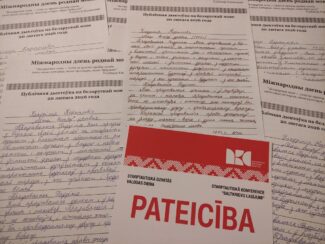
Following the conference, a public dictation in Belarusian was held. Each year, a work by an anniversary author is selected. This time, the dictation was based on a fragment from Vladimir Korotkevich’s (1930–1984) legend “Mother of the Wind,” reflecting on homeland, freedom, and the Belarusian language.
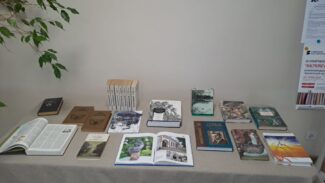
The chosen excerpt fit well with the conference concept. The writer loved Latvia, called it the “land of amber,” visited the country, maintained friendships with Latvian writers, and translated their works. During the event, an exhibition of V. Korotkevich’s books was on display, and literary scholar Valentīns Lukaševičs dedicated his research to the author’s most popular novel, “King Stakh’s Wild Hunt.”
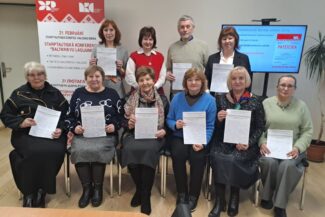
At the conclusion of the 7th International Conference “Belarusian Readings,” all participants received certificates, letters of appreciation, and commemorative gifts.
The conference was organized by the Forštate Cultural Space of the National Cultures Center of the Daugavpils Culture Palace (institution of the Daugavpils City Municipality).